Fast processing and shipping

Discount for you

Free Design

If you’re ordering custom patches for a brand, team, or uniform program, you’ll quickly face a choice: standard (flat) embroidery or 3D puff embroidery. They can look similar in a product listing, but they differ a lot in how they’re made, what designs they suit, how they wear over time, and where they look best. This guide covers those differences so you can choose with confidence.
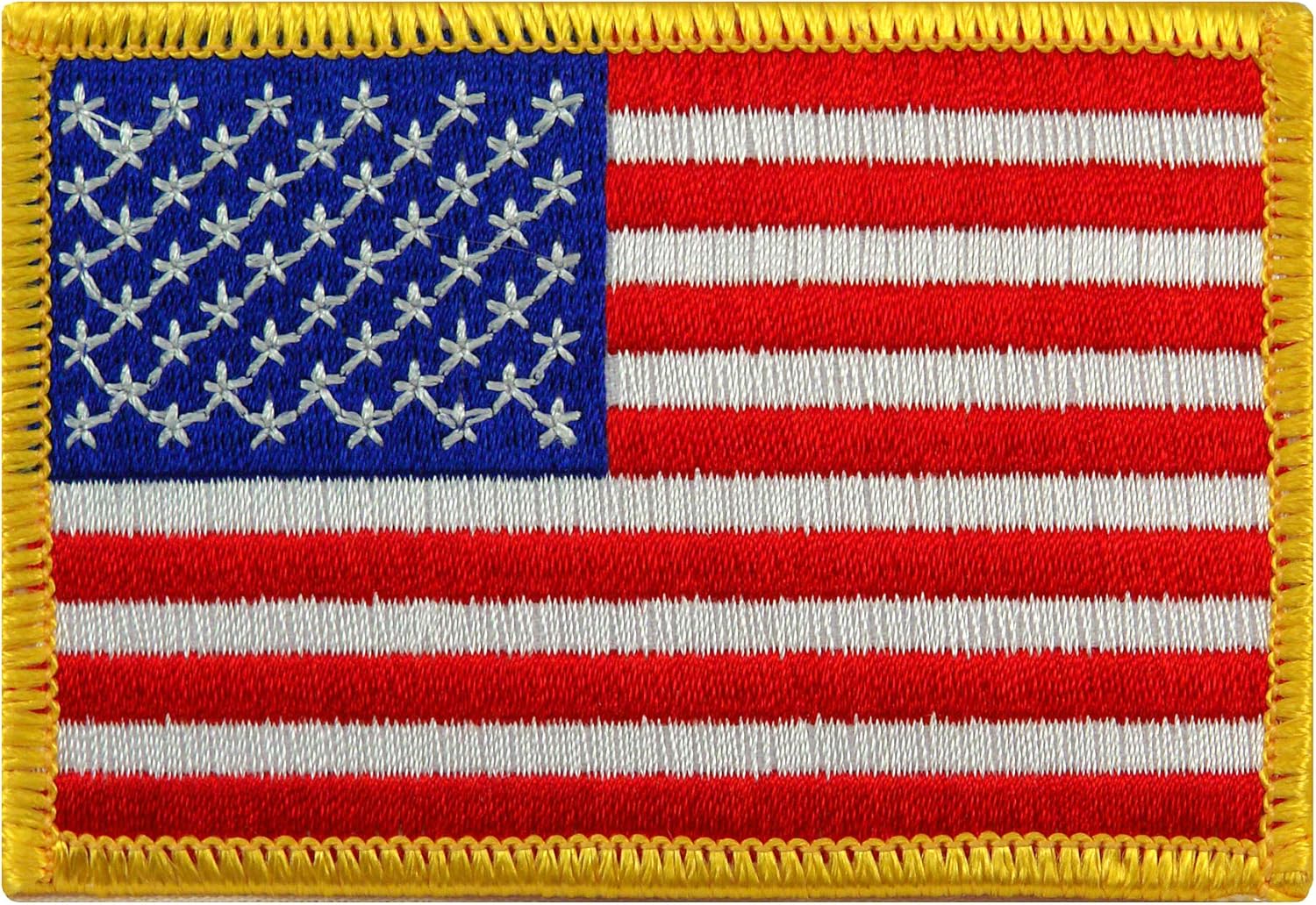
A standard embroidery patch is made by stitching thread directly onto a twill or felt base using computerized embroidery machines. The stitches lie flat against the fabric, usually as a mix of fill stitches (for large areas), satin stitches (for borders and lettering), and running stitches (for fine outlines).
The finished patch is typically edged with a merrowed border (a thick, overlocked edge for circles, squares, and simple shapes) or a hot-cut border (a heat-sealed edge for complex custom shapes). Backings include sew-on, iron-on (heat-seal), hook-and-loop (Velcro), and peel-and-stick adhesive.
A 3D embroidery patch, often called a 3D puff patch, adds a layer of foam beneath certain parts of the design. The machine stitches dense satin stitches over the foam, perforating it. The excess foam is then torn away, and heat is sometimes applied to clean up the edges. The result is a raised, sculpted element that stands several millimeters off the patch surface.
Most 3D patches are actually hybrids: the raised foam is used on the main element, such as a logo mark or bold lettering, while backgrounds and small details stay flat.
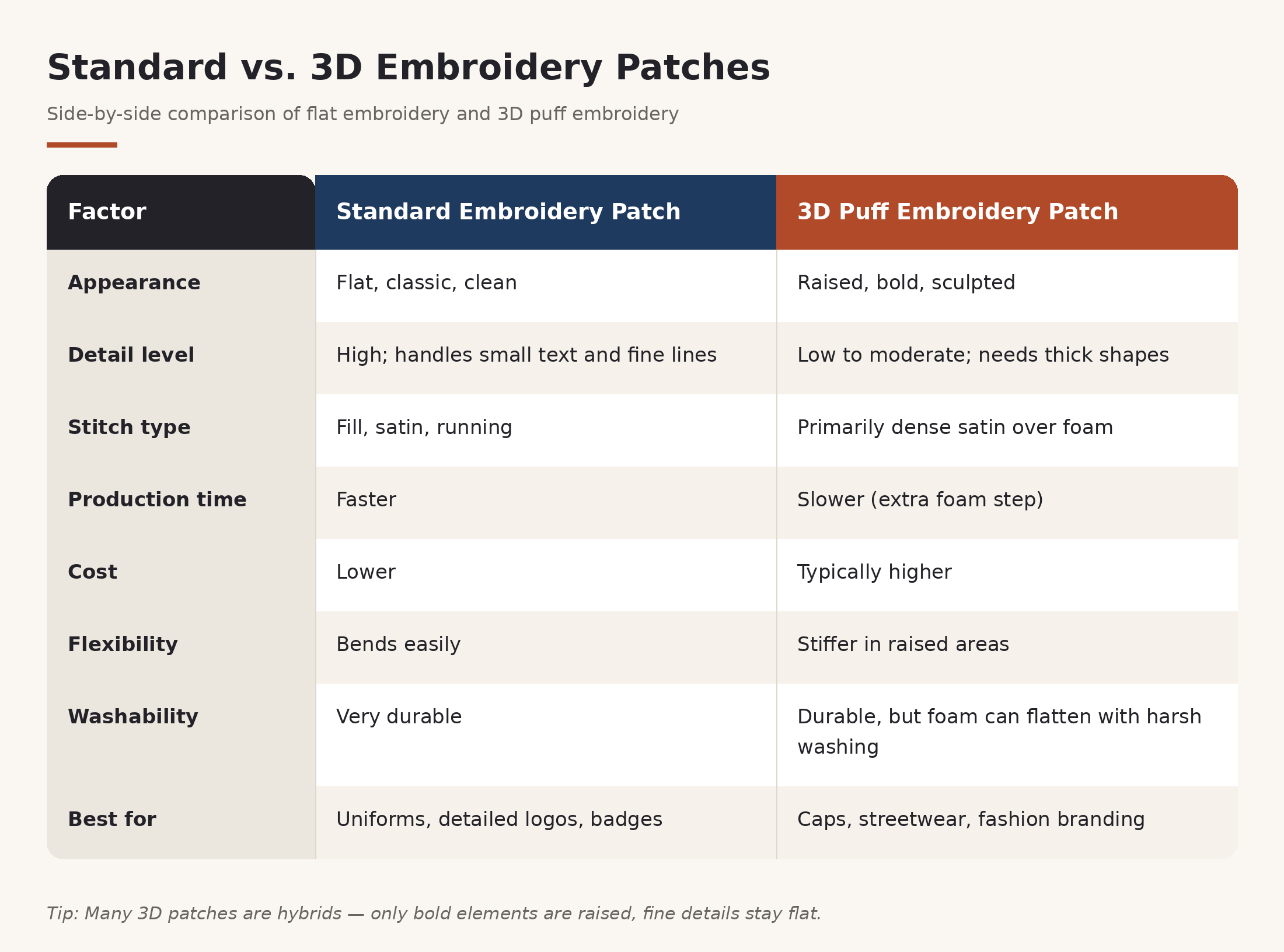
The biggest practical difference is what your artwork can handle. 3D puff works by wrapping satin stitches over foam, and satin stitches need width to cover the foam fully. Very thin lines, tiny letters, sharp points, and gradients either won’t puff cleanly or will show foam peeking through the stitches.
As a general rule used across the industry, raised lettering and shapes should have strokes that are thick and roughly uniform in width. Small serif fonts, intricate illustrations, and anything smaller than about a quarter inch tend to work better as flat embroidery. If your logo has both a bold icon and fine text, a hybrid patch that puffs only the icon is often the smartest option.
A good embroidery supplier will review your artwork and tell you which parts can be raised. If they agree to puff everything without comment, that’s worth questioning.
Both patch types are durable when made well. Standard embroidery holds up especially well to frequent laundering, which is why it dominates workwear and uniforms.
3D puff patches are also sturdy, but the foam can compress over time, particularly with hot drying cycles, heavy pressure, or aggressive industrial washing. To extend their life:
3D patches generally cost more than equivalent flat patches because they require denser stitching, added foam material, an extra production step, and more careful digitizing (the process of converting artwork into machine stitch files). Pricing for any patch also depends on size, stitch coverage, number of thread colors, border type, backing, and order quantity. Larger orders reduce the per-piece cost for both types.
Standard patches are the versatile, dependable choice. Use them for:
3D puff patches are about visual impact. Use them for:
Avoid 3D puff on thin, stretchy, or lightweight fabrics such as t-shirts and performance wear, where the stiffness can cause puckering and discomfort.
Ask yourself these questions:
Neither patch type is “better.” Standard embroidery patches excel at detail, durability, and value, making them ideal for uniforms, organizations, and detailed logos. 3D embroidery patches deliver texture and presence, making them the go-to for caps, streetwear, and brand merchandise. When in doubt, request a digital proof or a physical sample from your supplier and consider a hybrid design that raises only the elements that benefit most from dimension.
“My journey into fashion began with a passion for sustainability and a love for artisanal crafts. Since childhood, I’ve been captivated by the intricate handiwork of global artisans and the stories behind their creations.”